The Silent Symphony
Bacterial Communication Orchestrates Virulence and Resistance
Decoding the Molecular Language of Microbes
At the Laboratory for Bacterial Communication, we investigate how bacteria communicate, interact with their hosts, and adapt to stress. These processes lie at the heart of virulence, pathogenesis, and antimicrobial resistance (AMR). Our research seeks to decode the molecular language of bacteria to understand how communication and host–pathogen interactions shape disease outcomes and resistance evolution.
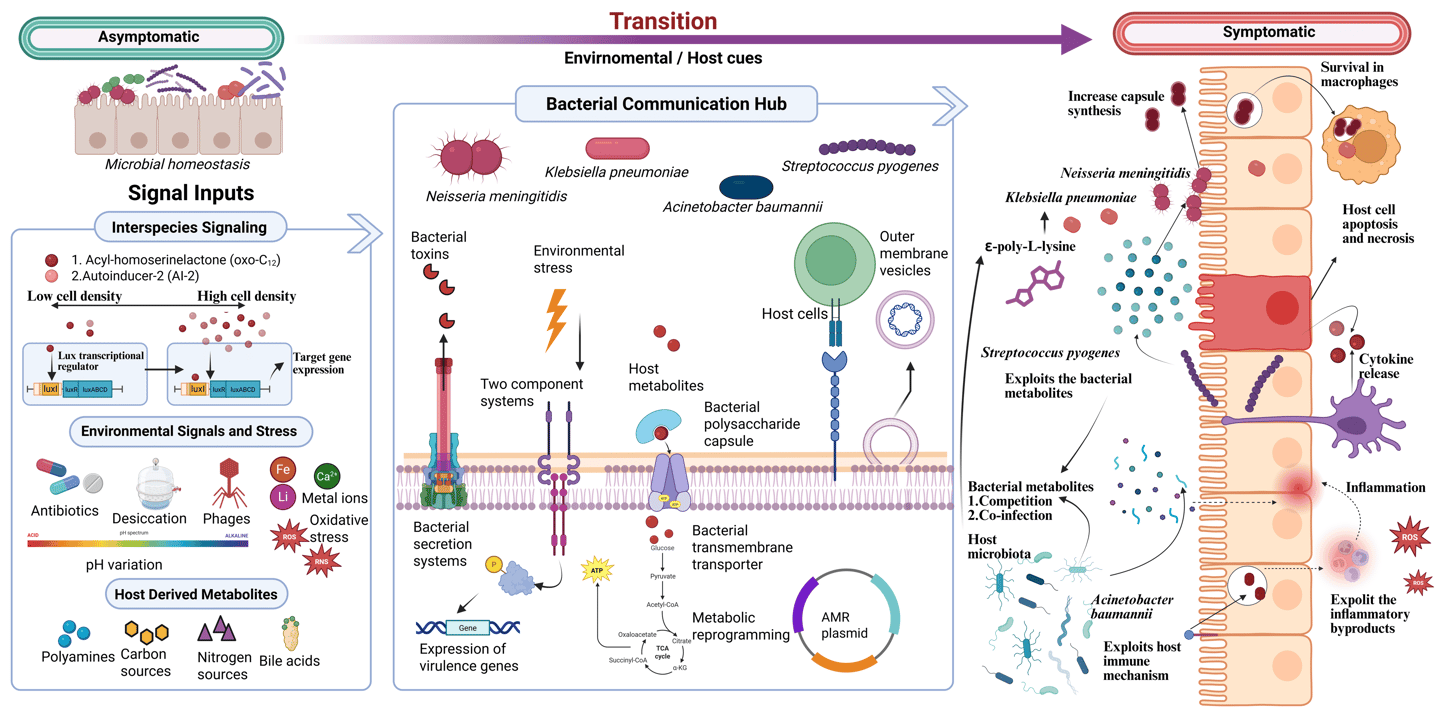
Once thought to exist as isolated entities, bacteria are now understood as social and adaptive organisms that thrive in coordinated communities. Through intricate cell-to-cell signaling systems, they exchange molecular cues to regulate gene expression, modulate metabolism, synchronize behavior, and fine-tune their survival strategies in response to both host and environmental pressures.
These communication systems extend beyond single species. Interspecies and interkingdom signaling allows bacteria to sense and respond to cues from other microbes and the host. Such signaling not only modulates microbial cooperation and competition but also profoundly influences host–pathogen interactions. Ultimately, it is the outcome of this complex molecular dialogue between the bacterium and the host defense mechanisms that determines whether infection is cleared, tolerated, or progresses to disease. The outcome of the interacion of the bacterium with the host and teh host-environment decides the colonisation, persist as asymptomatic or tranistion to a symtomatic disease.
Our research focuses on unraveling the molecular mechanisms that govern bacterial communication and its integration with host responses. By understanding how pathogens perceive host cues, manipulate signaling pathways, and adapt to immune or antibiotic stress, we aim to reveal how communication networks drive virulence and resistance.
Through this knowledge, we strive to develop novel therapeutic strategies that target bacterial communication pathways, disrupt harmful host–pathogen signaling loops, and prevent the emergence and spread of antimicrobial resistance.
At the Laboratory for Bacterial Communication, we envision a future where understanding the conversation between microbes and their hosts leads to smarter and more sustainable solutions to combat infectious diseases and AMR.
Bacteria are social organisms — and we decode their language...